
A Century of Care: Reflections at Julia Morgan Redwood Grove
There is something about a historic home that makes you wonder about all the lives it has held, the stories its walls could tell, and the people who have walked through its doors over the years. But after nearly three years of working around Julia Morgan Redwood Grove, I've come to understand that a historic estate is about much more than the history it holds. It is also about the people who choose to care for it, the lives that continue to unfold within it, and the dedication required to ensure its story doesn't end.
My work with the Musgrave family has given me a rather unique perspective on this remarkable property. I haven't spent every day walking its grounds or tending its gardens. Instead, I've experienced it through the people, projects, celebrations, and countless conversations that happen behind the scenes. I've had the opportunity to witness both the beauty visitors come to see and the extraordinary amount of work that goes into preserving it.
And my understanding of this place has changed considerably since the first time I walked through its doors.
The Wonder of First Impressions
I remember my first visit to Julia Morgan Redwood Grove. I was genuinely in awe. I had never seen an estate quite so grand or beautiful. Everything was immaculate. The house smelled lovely, every detail seemed thoughtfully considered, and the furnishings, finishes, and architectural elements felt as though they had each been chosen and placed with purpose. There was an atmosphere about the home that was difficult to describe. I simply knew I was somewhere special.
At the time, I knew very little about Julia Morgan. Architecture wasn't something I had given much thought to, and I certainly didn't understand the historical significance of the woman behind the design.
That changed as I became more involved with the estate. I began learning about Julia Morgan, Margaret Stewart, and the history of the Benbow Valley. I helped with tours and had the opportunity to explore the stories behind the property. What started as an appreciation for a beautiful home quickly became a fascination with its history.
Over time, however, something else happened. The house became familiar. It stopped feeling quite so enormous, quite so untouchable. I began to see it for what it also is: a home. A place where people come and go, where ordinary days unfold, where work gets done, and where extraordinary memories are made.
And as the initial awe gave way to familiarity, I began noticing something I hadn't fully appreciated before: the tremendous responsibility that comes with caring for a home that has stood for a hundred years.
What I had initially perceived as effortless beauty was actually the result of constant, deliberate care.
The Beauty Nobody Sees
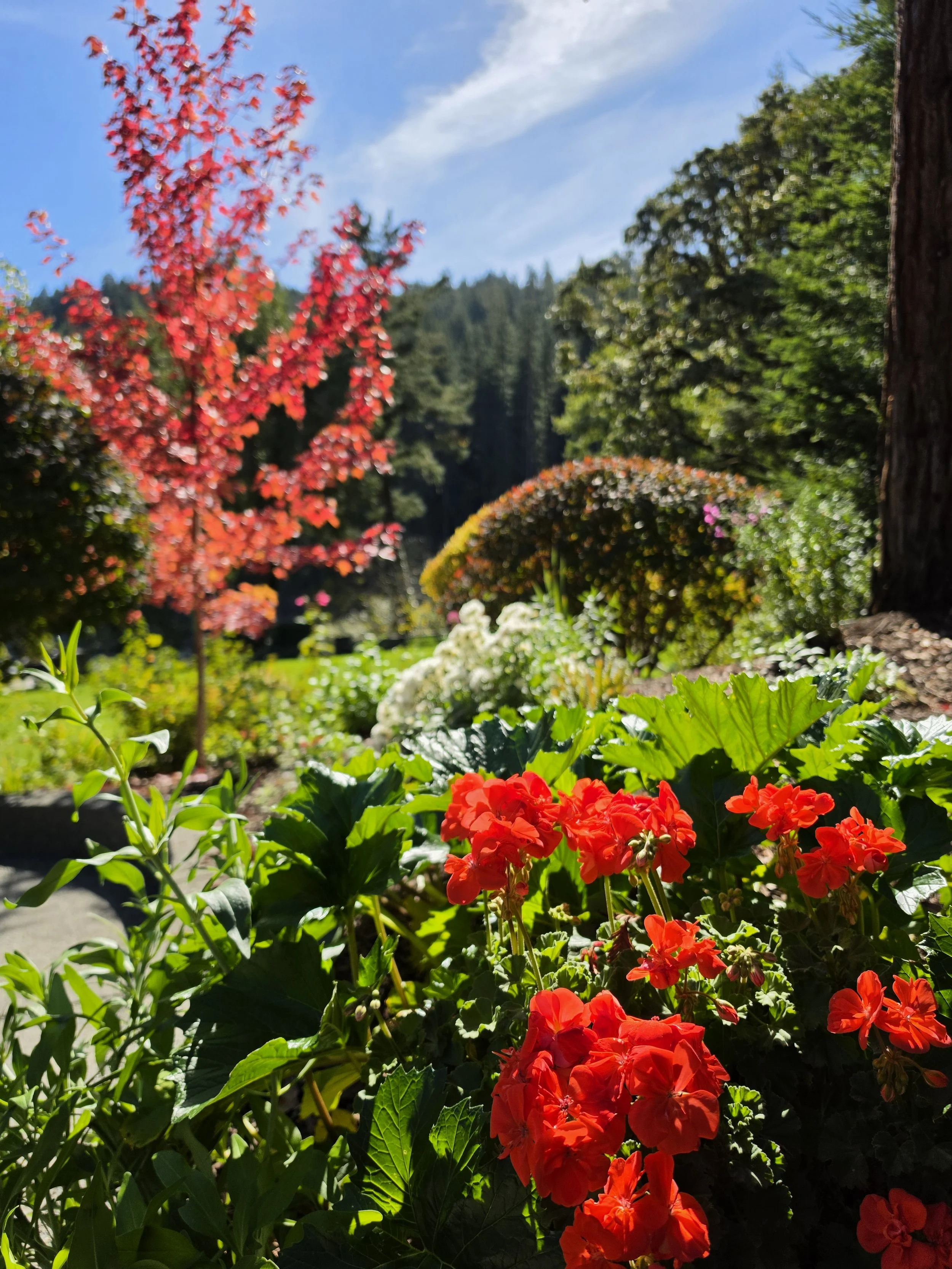
When visitors arrive at Julia Morgan Redwood Grove, they see the architecture, the gardens, the sweeping lawns, and the character that only time can create. They see the finished product. What they don't necessarily see is the work happening before they arrive and long after they leave.
A hundred-year-old home is not something that can simply be cleaned, locked up, and left alone. Wood needs to be cleaned and conditioned. Windows need attention. Paint fades, cracks develop, moisture finds its way into places it shouldn't, and nature continually tests the boundaries between the house and its surroundings.
There is always something.
I've come to think of maintaining a historic home a little like caring for a hundred-year-old person. It requires patience, attentiveness, and an understanding that even the smallest things matter. You learn to recognize what needs attention, anticipate what may become a problem, and understand that neglecting something small today can become a much larger problem tomorrow.
Preservation isn't a project with a finish line. It is an ongoing commitment that demands time, resources, knowledge, and an extraordinary amount of dedication.
And that is where the people behind the scenes have made the greatest impression on me.
The People Who Keep It Breathing
I've watched the estate manager care for this house in a way that is difficult to describe without sounding sentimental. But perhaps sentimentality is appropriate when talking about something that is clearly loved.
I've watched her touch nearly every surface as though she were washing a baby's skin. She notices the smallest scuffs, the streaks on the windows, and the details that most people would probably overlook. She doesn't just clean the house; she pays attention to it. She recognizes what needs to be done and takes the time to do it properly.
I've watched her climb ladders, despite not being particularly fond of heights, to oil the wood beams in the Great Room. She sets aside her own discomfort because she knows those beams need attention. It's a seemingly small moment, but to me, it represents something much bigger. It is the willingness to do what needs to be done, even when it isn't comfortable or convenient.
Then there is the groundskeeper.
When he first arrived, he knew very little about plants. Over the years, he has taught himself how to care for and cultivate the many varieties growing throughout the property. Through observation, research, trial and error, and experience, he has developed an understanding of the grounds that simply wasn't there when he began.
He troubleshoots, learns, adapts, and continually finds ways to improve what he has been entrusted to care for. And he does all of this while maintaining three acres of property. I've watched him oil fences, clean windows, fill cracks, apply fresh paint, and work to keep moss from taking hold on the roofs.
Three acres is a tremendous amount of ground to maintain, and the work never really stops.
What strikes me most about both of them is that they don't seem to view the estate as simply a place of employment. They have developed a relationship with it. They notice when something isn't quite right. They take pride in the details. They care about the outcome, not because someone might notice, but because they genuinely don't want to see the property deteriorate.
They care for it almost as though it were their own.
And I think that distinction matters. A historic property can have all the beauty and architectural significance in the world, but without people willing to nurture it, time will eventually take its toll. These are the people who help keep it breathing. Their work may go largely unnoticed by visitors, but without it, the experience of the estate would be entirely different.
They may not have been here when the house was built, but they are helping write the story of what it will become.
Stewardship Is More Than Preservation
I've also had the opportunity to watch Tanya invest in the estate and make thoughtful improvements that allow it to continue serving the people who live in it and visit it.
I've watched her reinforce the rock wall, expand the flagstone areas to create more room for entertaining, add a utility room in the garage, and construct a utility ramp connecting the landing to the front door.
These improvements represent another side of preservation. Caring for a historic property doesn't necessarily mean keeping everything exactly as it was a hundred years ago. It means understanding what makes the property special while recognizing that it must continue to function in the present.
There is a balance between honoring the past and making room for the future. A home cannot simply be frozen in time. People live there, work there, gather there, and create new memories. It must evolve in thoughtful ways while retaining the character and integrity that make it worth preserving.
And that takes more than good intentions. It takes a significant financial commitment, difficult decisions, and a willingness to continually invest in something that will always need attention.
I've come to understand that stewardship isn't about owning something beautiful. It's about accepting the responsibility that comes with it.
The Woman Behind the Architecture
One of the unexpected gifts of this experience has been discovering an appreciation for architecture and, in particular, for Julia Morgan herself.
I find her story incredibly inspiring. Here was a woman pursuing a profession at a time when the opportunities available to women were limited, particularly in a field dominated by men. She encountered barriers, faced rejection, and challenged expectations that many people of her time would have simply accepted.
But she kept going.
What I admire most is her tenacity. She didn't allow the expectations of society to determine what she was capable of accomplishing. She pursued her education, her profession, and her vision at a time when doing so required extraordinary courage.
There is something powerful about learning the story of a woman who refused to accept that certain doors were not meant to open for her. She didn't let the word no become the end of the conversation.
Her story has stayed with me. It makes me think that the sky really is the limit. Sometimes you simply have to be willing to go after something, even when others don't believe you can.
And perhaps that's another way this estate has changed me. Before working around Redwood Grove, architecture was just a word. Now, when I visit San Francisco, I find myself looking up at buildings, studying their details, wondering who designed them, and wanting to know their stories. I notice the windows, the woodwork, the craftsmanship, and the thought that went into creating something meant to last.
I arrived with very little understanding of architecture. I leave with a curiosity I didn't know I had.
A Place That Continues to Make History
For all the attention given to preserving the history of an estate, I think there is something equally important about allowing new history to happen there.
Julia Morgan Redwood Grove isn't simply a beautiful historic home. It is a place where people gather, celebrate, and mark some of the most meaningful moments of their lives.
Think about the hundreds of couples who have stood on those grounds and made promises to one another. People have traveled from near and far to gather with the people they love, exchange vows, and begin a new chapter of their lives.
There is something almost sacred about that.
A wedding is a promise made between two people, a commitment to build a life together. And here, a century-old estate becomes the setting for those promises. Its walls and gardens provide a backdrop for moments that couples hope will last a lifetime.
I sometimes think of the estate as a place that holds space for these promises, welcoming one generation after another to create memories within its grounds.
The house has witnessed a hundred years of life, and its story is still unfolding. Every celebration, every gathering, every visitor adds something new. The estate isn't frozen in its history. It is continuing to make history.
And perhaps that is what makes a living historic property so special. It isn't simply something to admire from a distance. It is something to experience, to share, and to become a small part of.
A Hundred Years From Now
I sometimes wonder what someone walking through Redwood Grove a hundred years from now will see. Will they notice the same architectural details that I have come to appreciate? Will the gardens still be growing? Will the wood beams still carry the care of the people who have tended them? Will couples still gather there to celebrate their love and begin their lives together?
They probably won't know the names of the people who spent their days oiling the woodwork, tending the gardens, repairing the fences, or making sure every little detail was cared for. They certainly won't know that I spent a few years helping behind the scenes.
And that's okay.
Because perhaps that is the very nature of stewardship. You don't necessarily care for something because you expect to be remembered. You do it because you believe it is worth caring for. You recognize that you are only one small part of a much longer story, and that the work you do today may allow someone else to experience something beautiful many years from now.
A hundred years is a long time, but it is also a reminder that we are temporary visitors in the stories of the places we love. We inherit what others have built, we care for it during our time, and hopefully, we leave it in a condition that allows someone else to do the same.
As Julia Morgan Redwood Grove celebrates its centennial, I find myself thinking less about the fact that the house has reached a hundred years and more about what it will take to reach two hundred.
It will take continued investment. It will take thoughtful decisions. It will take people willing to learn, to work, to repair, to nurture, and sometimes to sacrifice their own comfort for the sake of something bigger than themselves.
Most of all, it will take love.
I hope that a hundred years from now, there will still be people who recognize what a special place this is. People who understand that its value isn't found only in its architecture or its history, but in the lives it continues to touch. People who will tend its gardens, care for its walls, protect its details, and welcome new generations through its doors.
I may not be remembered as someone who was part of its story, and that's perfectly fine. I'm grateful to have had the opportunity to witness even a small part of it.
Because a historic estate isn't kept alive by its history alone.
It is kept alive by the people who continue to love it, care for it, and give it a reason to live on.
And that, perhaps, is the greatest lesson these three years have taught me.