
More Than a Wedding Venue: Why the Policies at Julia Morgan Redwood Grove Matter
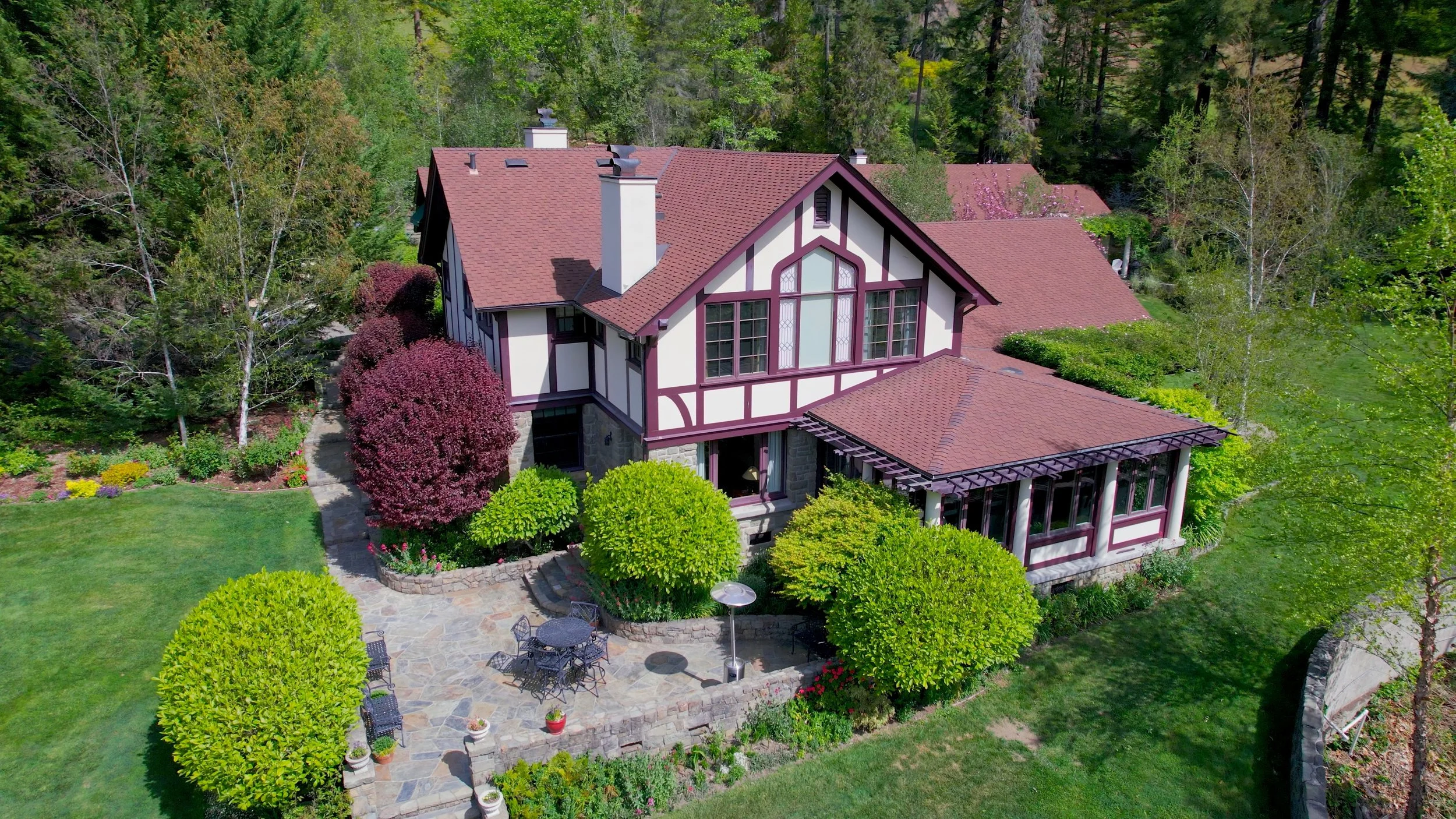
Julia Morgan Redwood Grove Historic Estate
When you're planning a wedding, there are certain parts of the process that are easy to get excited about.
The flowers.
The dress.
The dinner.
The music.
The photographs.
The people you love gathered together in one place.
Then there are the less glamorous parts: contracts, insurance, deposits, timelines, vendor requirements, event end times and venue policies. We understand why those details can sometimes feel like a lot. And we also understand why, when you're looking at a contract, a fee such as a $1,000-per-hour overtime charge can make you stop and ask, “Why?”
It's a fair question.
At Julia Morgan Redwood Grove, our policies aren't arbitrary. They come from the reality of operating a historic estate, hosting celebrations, employing a team, coordinating vendors, respecting our neighbors and caring for a property that has been part of people's lives for approximately 100 years. More importantly, these policies allow us to do something we consider incredibly important:
Protect the experience of the people who choose to celebrate here — while protecting the property itself for the people who will come after them.
Let's Talk About the $1,000 Overtime Fee
This is probably one of the easiest policies to look at and think, That's a lot of money. So let's put it into perspective. Suppose your wedding is contracted to end at 10:00 p.m. At 10:00, your guests are still dancing. The band wants to play one more song. The bar is still serving. Everyone is having such a wonderful time that 10:00 becomes 10:15. Then 10:15 becomes 10:30. Before you know it, you've gone an hour beyond the contracted event time. From the outside, it can look like the venue is simply charging $1,000 because you stayed an extra hour.
But that's not what is happening.
A venue doesn't shut down at the end of an event with the flip of a switch. If six venue employees are scheduled to work through the contracted event time, those employees may now need to remain on site. Depending on their schedules and applicable wage requirements, that can mean additional labor and overtime costs.
The lights are still on.
Heating or cooling may still be operating.
Restrooms are still in use.
Security and property oversight continue.
Cleanup and breakdown are delayed.
The people responsible for closing and securing the property are still working.
And the venue's entire end-of-day operation has shifted.
That one additional hour can therefore create costs well beyond simply keeping the doors open.
So why establish the cost in advance?
Because nobody benefits from figuring it out afterward.
Without a predetermined overtime policy, the venue would have to determine the actual costs incurred after the event, such as additional staff time, overtime rates, utilities used and other operating expenses and then determine how those costs should be passed along.
That creates uncertainty for everyone.
A clearly stated overtime rate eliminates that uncertainty. You know the cost before you book. Your planner knows it. Your vendors know it. And everyone has a strong incentive to build a timeline that allows your celebration to end when planned.
The objective isn't to charge overtime. The objective is to plan well enough that you never need it.
The End Time Is About More Than the Clock
The same principle applies to nighttime events.
Julia Morgan Redwood Grove isn't located in isolation. It is part of a community, and that means our celebrations have to coexist respectfully with the people who live around the property. Noise regulations and nighttime restrictions aren't simply venue preferences.
They are part of being a responsible neighbor.
If there were no boundaries around amplified music or event hours, one celebration could easily extend late into the night. Then another could do the same. Over time, the impact on the surrounding community would become significant.
A successful venue isn't just one that creates an unforgettable experience for the people attending an event. It's one that can continue doing so because it has maintained good relationships with the community around it.
That means knowing when the celebration needs to wind down.
Your Deposit Isn't Just About Trusting You
Another area where couples sometimes have questions is the financial commitment required to reserve a date. And again, it's worth looking at what you're actually reserving. You're not renting an empty ballroom.
You're reserving a historic estate.
Julia Morgan Redwood Grove dates to 1926. It contains architectural details, furnishings, materials and objects that have been cared for across generations. Some elements are original. Some are extraordinarily difficult or impossible to replace.
That changes the nature of the responsibility involved in hosting an event here. Consider something as simple as a piece of furniture. At a conventional venue, if a table or chair is damaged, the venue may be able to order another one. At a historic property, an original or historic piece may have value that goes far beyond its replacement cost. The same can be true of wallpaper, architectural finishes, fixtures and other elements of the estate. You can't necessarily go online and order another 1926 original.
That's why the financial requirements associated with reserving the property exist.
The initial $1,500 retainer secures your date, while the remainder of the retainer brings the total retainer to 50% of the rental fee. This separate retainer provides an additional layer of protection for the property.
For example, on a $10,000 rental, the total retainer would be $5,000. The point isn't that we expect something to go wrong. Quite the opposite. We expect couples and their guests to treat the property with care.
But responsible stewardship means planning for the possibility that something unexpected may happen.
Imagine a Historic Property Without Those Protections
It's useful to imagine the alternative. Imagine a venue with no security deposit. No defined event hours. No overtime policy. No vendor access rules. No insurance requirement. No limitations around nighttime noise. It might sound wonderfully easy. Until something happens.
A vendor arrives before the property is ready. A delivery blocks another vendor's access. A wedding runs two hours late. Staff unexpectedly have to stay several hours beyond their scheduled shifts. Utilities continue operating. A neighbor complains about noise. A piece of historic furniture is damaged. A historic finish is accidentally damaged during setup. A vendor needs additional breakdown time, delaying the property's ability to close.
Now everyone is trying to solve problems that should have been addressed during planning.
The couple is stressed.
The venue is scrambling.
Vendors are adjusting their schedules.
And costs that nobody anticipated have suddenly appeared.
That's why structure matters.
Not because structure is more important than the celebration, but because good structure gives the celebration room to succeed.
What You're Really Being Entrusted With
There is another piece of this that is easy to overlook.
When you celebrate at Julia Morgan Redwood Grove, you're not simply using a beautiful backdrop for photographs. You're being entrusted with a place that has been around for a century. Think about everything that has happened here since 1926. People have walked through these rooms. Families have gathered here. Conversations have happened around tables. Milestones have been celebrated.
Generations have come and gone.
The property has witnessed an enormous amount of ordinary life and extraordinary moments.
And now, for a few hours or a few days, your story becomes part of that continuum.
That's a pretty remarkable thing.
You Become Part of the History, Too
This may be the most special thing about celebrating at a historic property.
A hundred years from now, people may still talk about Julia Morgan and the history of the estate. They may study its architecture. They may tell stories about the people who lived here. They may walk through the same rooms where generations before them gathered. But your wedding is part of that story now, too. Your photographs will capture you standing in those rooms. Your vows will have been spoken there. Your family will have gathered there. Your friends will have danced there.
Your children may someday hear the story of the day their parents were married at Julia Morgan Redwood Grove.
And long after the wedding is over, the fact remains:
You were here.
Your celebration became one of the many chapters in the life of this property. That is what makes a historic venue fundamentally different from a place that was built simply to host events. You're not just borrowing a beautiful setting for an evening.
You're adding your own moment to a living history.
That's Why We Take the Details Seriously
When you look at an event policy by itself, it can be easy to wonder why it matters.
Why does the venue need a specific end time?
Why can't the music go another hour?
Why is insurance required?
Why is there a security deposit?
Why are vendor arrival times controlled?
Why are there restrictions around certain areas of the property?
The answer becomes clearer when you look at the whole picture.
We're not simply managing a party.
We're managing a historic property while creating an environment where people can celebrate some of the most important moments of their lives. Those responsibilities have to coexist.
And they can. In fact, we believe the best celebrations happen when they do.
The Policies Are Part of the Experience
We don't expect every couple to fall in love with every line of a venue contract. But we do want every couple to understand what they're agreeing to and why those expectations exist. We believe in being transparent about the practical realities before you book. Ask questions. Tell us about your vision. Talk with your planner. Let us know if you have special circumstances or a unique request. The more everyone understands going in, the more smoothly the day can unfold.
And when your wedding day finally arrives, our hope is that you won't be thinking about any of these policies at all. You'll be too busy getting married. You'll be listening to the music. You'll be hugging your family. You'll be laughing with your friends. You'll be taking photographs in a place that has been standing for a hundred years. And someday, when you look back at those photographs, you won't just see a beautiful venue.
You'll see your place in its story.
Because Julia Morgan Redwood Grove isn't only a place where history happened. It is a place where history is still happening. And when you choose to celebrate here, for that brief and beautiful moment, your story becomes part of it.
That is something worth protecting.